Stay Informed: The Importance of Receiving Updates on Type 1 Diabetes Research and Clinical Trials

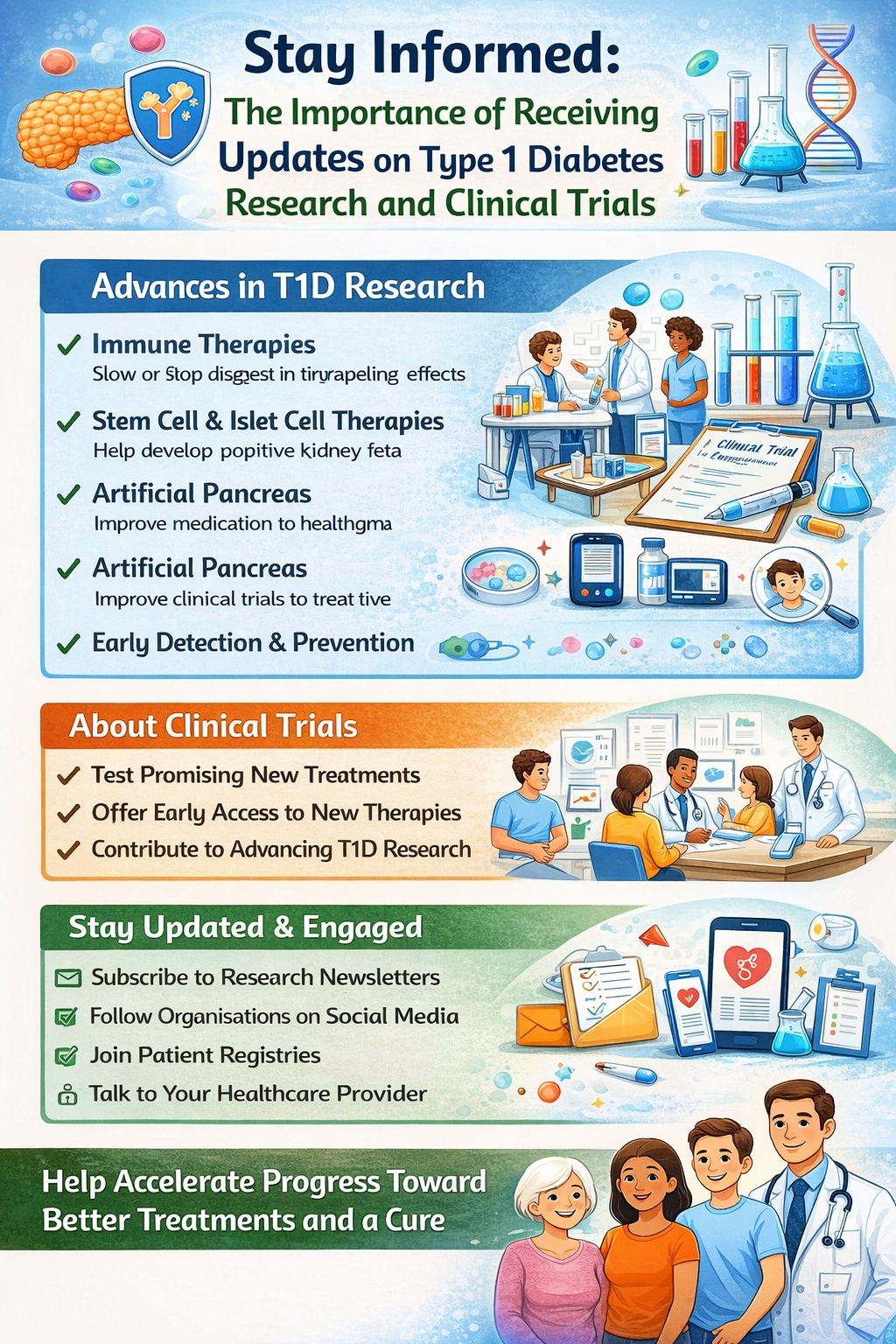
Living with or caring for someone with Type 1 Diabetes means staying informed about the latest medical advancements. Research in this field is moving quickly, with scientists and clinicians working to develop better treatments, improve daily management, and ultimately find a cure.
Receiving regular updates about research and clinical trials can empower individuals, families, and healthcare providers with knowledge about new opportunities and breakthroughs.
Why Research Updates Matter
Research plays a critical role in improving the lives of people with Type 1 Diabetes. Staying updated helps you:
- Learn about new therapies and treatment options
- Understand advances in diabetes technology
- Discover clinical trials that may be available to participate in
- Stay informed about potential prevention strategies
Medical research continues to uncover new insights into how the immune system attacks insulin-producing cells and how those cells might be protected or restored.
Advances in Type 1 Diabetes Research
Recent research has focused on several promising areas, including:
Immunotherapy
Scientists are exploring treatments that may slow or stop the immune system from attacking insulin-producing beta cells.
Cell and Regenerative Therapies
Researchers are studying stem cells and islet cell transplantation as potential ways to restore the body’s ability to produce insulin.
Artificial Pancreas Systems
Advances in continuous glucose monitors and insulin pump technology are helping create automated insulin delivery systems that improve glucose control.
Early Detection and Prevention
Screening programs aim to identify people at risk before symptoms appear, which could allow early intervention.
Organizations like Breakthrough T1D and Type 1 Diabetes TrialNet lead many global studies designed to understand, prevent, and treat the disease. Check out our TrialNet post to learn more.
Understanding Clinical Trials
Clinical trials are research studies that test new treatments, devices, or approaches to care. They are essential for developing safer and more effective therapies.
Participating in clinical trials can:
- Provide access to new treatments before they are widely available
- Help advance scientific understanding of Type 1 Diabetes
- Contribute to the development of future therapies and potential cures
Every clinical trial follows strict ethical and safety guidelines to protect participants.
Click HERE to learn more and find clinical trials.
How to Receive Research and Trial Updates
There are several ways to stay informed:
- Subscribe to newsletters from trusted organizations
- Follow research institutions and diabetes foundations
- Join patient registries that notify you about relevant clinical trials
- Speak with your healthcare provider about new developments
These resources often share updates about ongoing studies, research findings, and opportunities to participate in trials.
Click HERE to sign up for newsletter emails to receive the latest and greatest T1D updates.
Looking Toward the Future
The future of Type 1 Diabetes research is promising. Scientists are working toward treatments that could slow disease progression, protect insulin-producing cells, and potentially restore the body’s ability to produce insulin.
By staying informed and engaged with research updates and clinical trials, individuals and families affected by Type 1 Diabetes can play an important role in advancing progress toward better treatments—and one day, a cure.