
Living with Type 1 Diabetes (T1D) means paying close attention to how food affects your blood sugar—but that doesn’t mean meals have to be complicated!
Managing meals with Type 1 diabetes can sometimes feel overwhelming. Counting carbs, dosing insulin, and trying to keep blood sugars stable all at the same time isn’t always easy—especially with kids.
Instead of focusing only on carbohydrates, MyPlate encourages a balance of vegetables, fruits, protein, grains, and dairy. This balance can help support steadier blood sugar levels and better overall nutrition.
MyPlate is a visual guide developed by the U.S. Department of Agriculture (USDA) to help people build balanced and healthy meals. It replaced the old Food Pyramid and offers a simple way to visualize what your plate should look like at each meal.
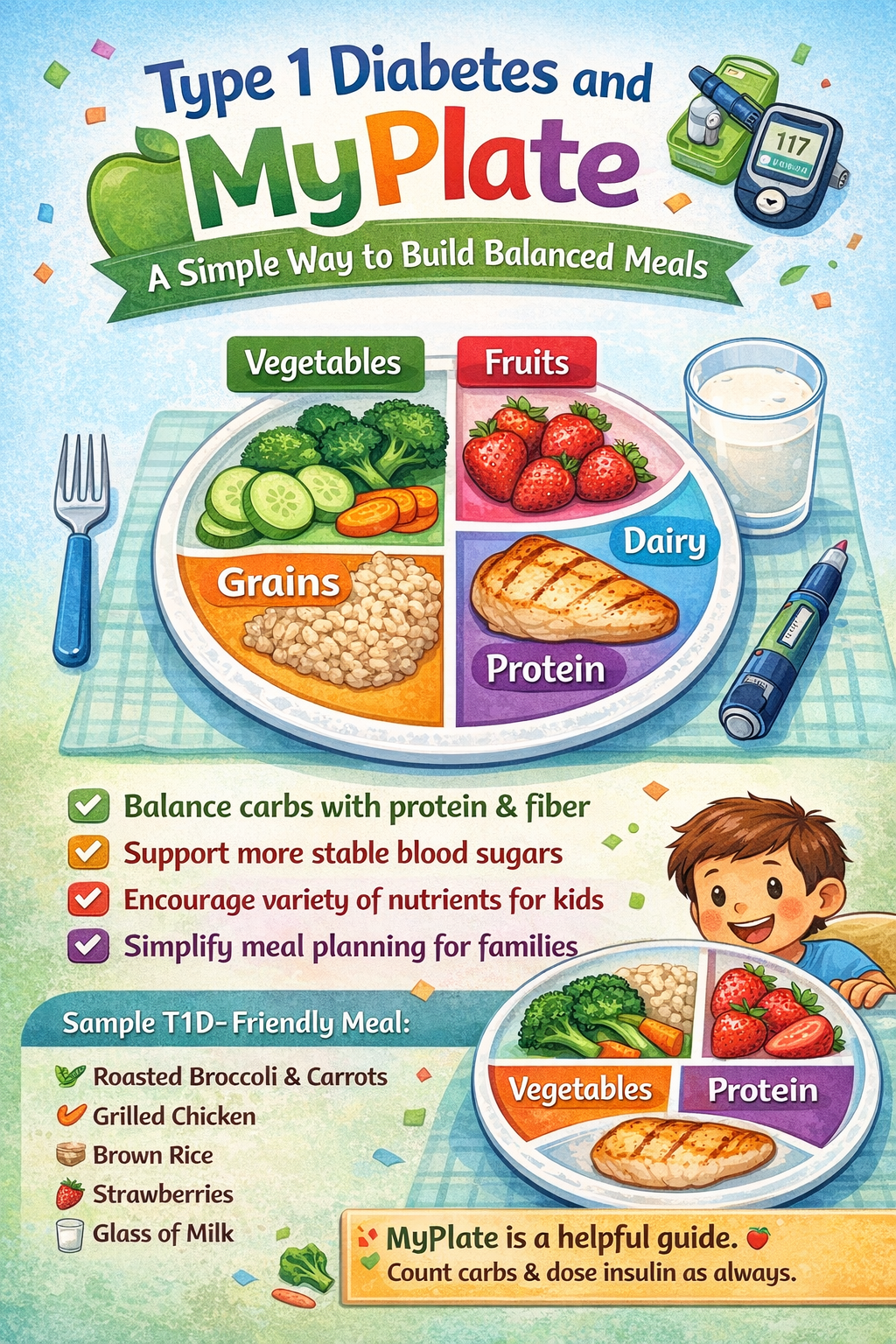
The MyPlate method is a visual, easy way to balance your plate and support stable blood sugar.
🥗 The MyPlate Breakdown
Imagine your plate divided into 4 sections, plus a side of dairy:
🥦 Vegetables (about ½ your plate combined with fruits)
Aim to fill about half your plate with vegetables and fruits, with vegetables making up the majority. Non-starchy vegetables like broccoli, cucumbers, peppers, and spinach are great options because they have fewer carbs.
- Examples: Broccoli, carrots, spinach, bell peppers
- High in fiber, vitamins, and low in calories
- Helps manage blood sugar and keeps you full
🍎 Fruits (the smaller portion of the half plate)
Fruits contain natural carbohydrates, so they still count toward your carb total. Pairing fruit with protein or fat can help slow blood sugar spikes.
- Examples: Apples, berries, oranges
- Natural sugars—important to monitor for diabetes
- Choose whole fruits over juices
🍞 Grains (¼ of your plate)
Grains are a main carbohydrate source. Choosing whole grains (brown rice, whole-grain bread, quinoa, oats) can provide fiber that helps slow digestion.
- Examples: Brown rice, whole wheat bread, oats
- Aim for whole grains over refined (white) grains
- Important source of carbs—watch portions if managing blood sugar
🍗 Protein (¼ of your plate)
Protein foods like chicken, fish, eggs, beans, tofu, or nuts help keep kids full and can reduce blood sugar swings when eaten with carbs.
- Examples: Chicken, tofu, fish, eggs, beans
- Supports muscle and helps stabilize blood sugar
- Choose lean or plant-based options when possible
🥛 Dairy (on the side)
Milk, yogurt, and fortified alternatives provide calcium and protein. Remember that milk and yogurt also contain carbohydrates.
- Examples: Low-fat milk, yogurt, cheese
- Good source of calcium and vitamin D
- For diabetes: Choose unsweetened or low-sugar options
💡 Why It’s Useful for Diabetes (especially T1D)
- Encourages balanced meals that reduce blood sugar spikes
- Helps with portion control
- Combines carbs with protein and fiber
- Helps reduce rapid blood sugar spikes
- Easy to use at home, at school, or when dining out
You would still count carbohydrates in the fruit, grains, and dairy and dose insulin based on your insulin-to-carb ratio.
Example MyPlate Meal for a Child with T1D
Example dinner plate:
- 🥦 Roasted broccoli and carrots
- 🍗 Grilled chicken
- 🍚 Brown rice
- 🍓 Strawberries
- 🥛 Glass of milk
You would count the carbs from:
- rice
- fruit
- milk
Then dose insulin based on your child’s insulin-to-carb ratio.
For more information, visit the MyPlate.gov website. This website provides recipes, meal plans, and nutrition information.
Newer Focus in the Updated Guidance-
The MyPlate graphic hasn’t changed, but the updated guidance focuses more on whole foods, fiber, and limiting added sugars and sodium.The modern MyPlate messaging now highlights:
✔ More whole foods
✔ Less added sugar
✔ Lower sodium intake
✔ More plant-based protein options
✔ Healthy oils instead of solid fats
Visit our nutrition page for more information and recipes!