
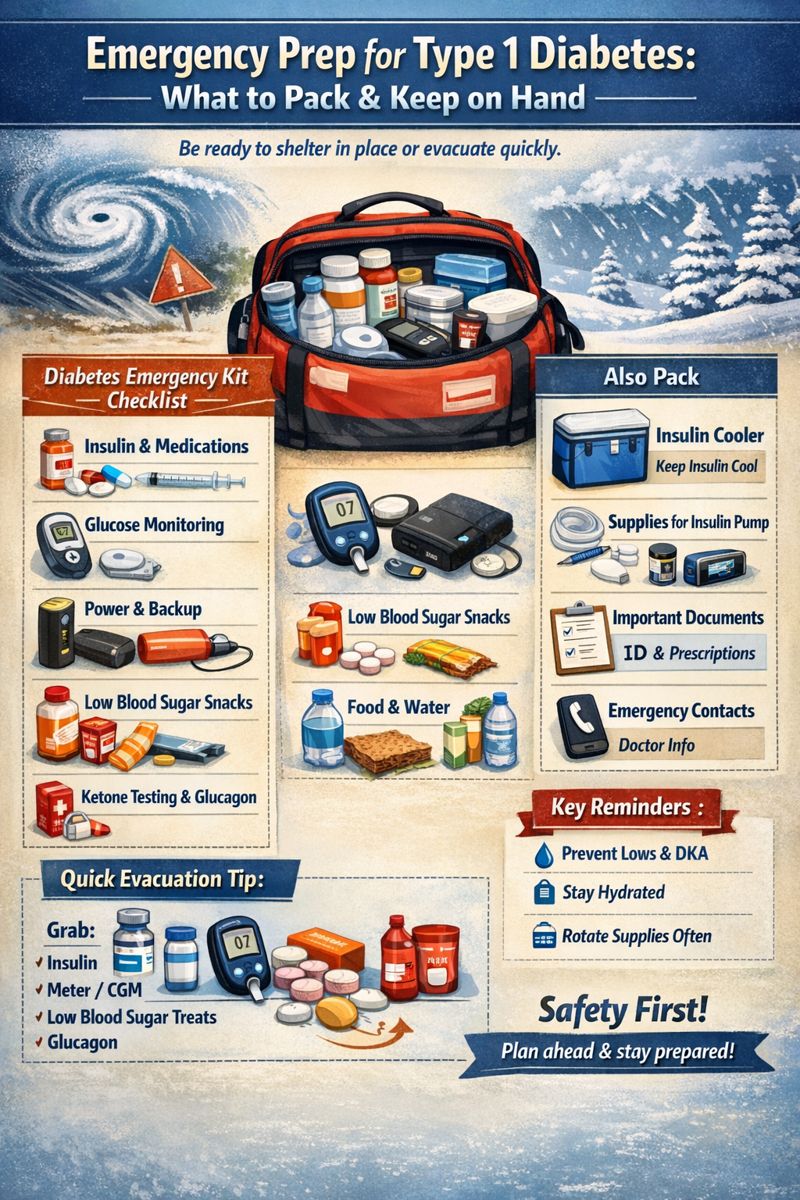
When a hurricane, blizzard, wildfire, or extended power outage hits, people with Type 1 diabetes can’t just “wait it out.” Insulin, monitoring supplies, food timing, and temperature control are all critical. A little planning turns a dangerous situation into a manageable one.
This guide walks you through building a diabetes emergency kit so you’re ready to shelter in place or evacuate on short notice.
First Rule: Always Have More Than You Think You Need
Aim for at least 3–7 days of supplies, and if possible, closer to two weeks. Pharmacies may be closed, shipping may stop, and roads may be blocked.
Your Diabetes Go-Bag Checklist
Keep these items together in a clearly labeled bag or container.
🩸 Insulin & Medications
- All types of insulin you use (basal and bolus)
- Extra vials or pens (unopened if possible)
- Syringes or pen needles
- Backup long-acting insulin if you use a pump (ask your provider ahead of time)
- Any other prescribed medications
- A copy of prescriptions (paper or photo on your phone)
Tip: Rotate supplies every few months so nothing expires.
📟 Glucose Monitoring Supplies
Whether you use a CGM, meter, or both—bring backups.
- Blood glucose meter
- Extra test strips (more than usual — stress and illness can raise glucose)
- Lancets and lancing device
- Continuous Glucose Monitor (CGM) sensors
- CGM transmitter (if removable)
- CGM receiver (if you don’t rely only on your phone)
- Alcohol wipes
🔋 Power & Device Backup
Storms often mean power loss.
- Extra pump supplies (infusion sets, reservoirs/cartridges, insertion devices)
- Extra CGM sensors and adhesive patches
- Pump batteries or charging cable
- Portable power bank (fully charged)
- Extra charging cables
- Car charger (if evacuating)
🍬 Low Blood Sugar Treatment (Fast Carbs)
Hypoglycemia can happen more often during stress, missed meals, or extra activity.
Pack multiple forms:
- Glucose tablets or gel
- Juice boxes
- Regular soda (not diet)
- Hard candy
- Honey or sugar packets
Keep some in your pocket and some in your bag.
🧃 Food & Hydration
- Non-perishable snacks with carbs and protein (granola bars, peanut butter crackers, trail mix)
- Meal replacement shakes
- Bottled water (dehydration raises blood sugar)
- Electrolyte drinks (non-diet and low-sugar options)
🧪 Ketone Testing
Illness and high blood sugar increase DKA risk.
- Urine ketone strips or blood ketone meter and strips
💉 Severe Low Blood Sugar Rescue
- Glucagon kit (injectable or nasal)
- Make sure someone with you knows how to use it
❄️ Insulin Temperature Protection
Insulin can be damaged by extreme heat or freezing.
- Insulated medical cooler
- Reusable cold packs (not directly touching insulin)
- Evaporative cooling pouch (like FRIO-type wallets)
- Thermometer if possible
Important: Don’t freeze insulin, and don’t leave it in a hot car.
📄 Important Documents
Keep copies in a waterproof bag and photos on your phone.
- List of medications and doses
- Your healthcare provider’s contact info
- Insurance card
- ID
- Medical alert information (“Type 1 Diabetes – Insulin Dependent”)
If You Use an Insulin Pump
Add:
- Extra infusion sets (more than you think)
- Extra reservoirs/cartridges
- Insertion device
- Skin prep and adhesive wipes
- Tape or overpatches (sweat and humidity loosen sites)
- Backup insulin pens or syringes in case the pump fails
If You’re Sick or Under Major Stress
Illness, infection, and stress hormones can push blood sugar higher.
General safety steps:
- Check blood sugar more often
- Test for ketones if glucose stays high
- Stay hydrated
- Continue taking insulin — even if you’re not eating normally
Have your provider’s sick day plan written down ahead of time.
Where to Store Your Kit
- One kit at home in an easy-to-grab spot
- A smaller version in your car (weather-protected)
- Travel kit if you live in a disaster-prone area
Tell family members where it is.
Quick Evacuation Tip
If you have only a few minutes, grab:
- Insulin
- Glucose meter or CGM receiver
- Low blood sugar treatment
- Pump supplies (if used)
- Glucagon
Everything else is secondary.
Final Thought
In an emergency, blood sugars may run higher or lower than usual — perfection isn’t the goal. Safety is. Prevent severe lows, avoid DKA, stay hydrated, and use your supplies steadily until normal care is available again.
Preparing once can protect you for years. Your future self will be very glad you did.