
For many people living with Type 1 Diabetes, insulin injections are a reliable and effective way to manage blood sugar levels. Today, traditional insulin pens are also being enhanced with smart technology to make diabetes management easier and more precise.
💉 Traditional Insulin Injections
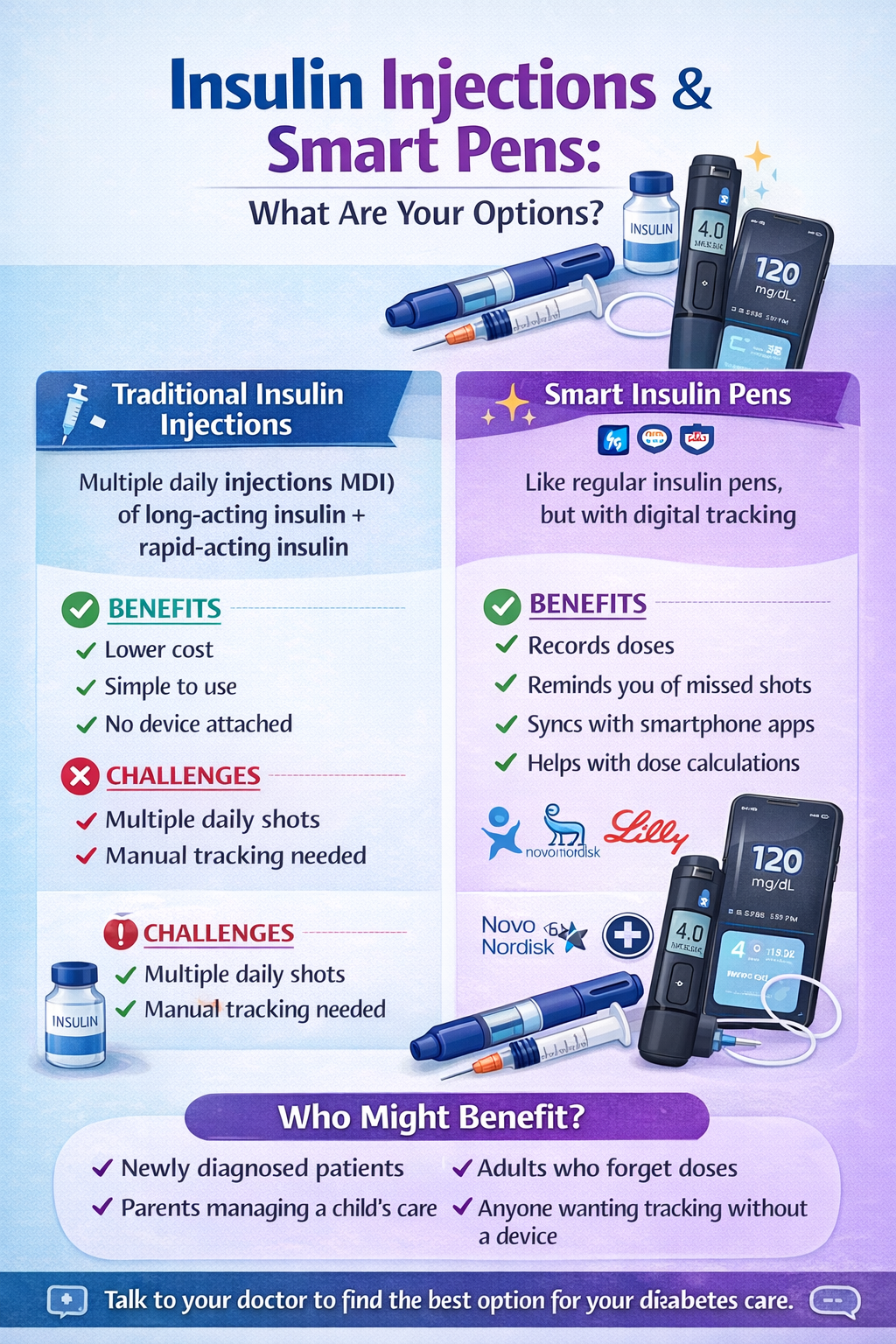
Most people using injections follow a Multiple Daily Injection (MDI) routine:
- Long-acting insulin (1–2 times daily) for basal coverage
- Rapid-acting insulin before meals for carbs and corrections
✅ Benefits
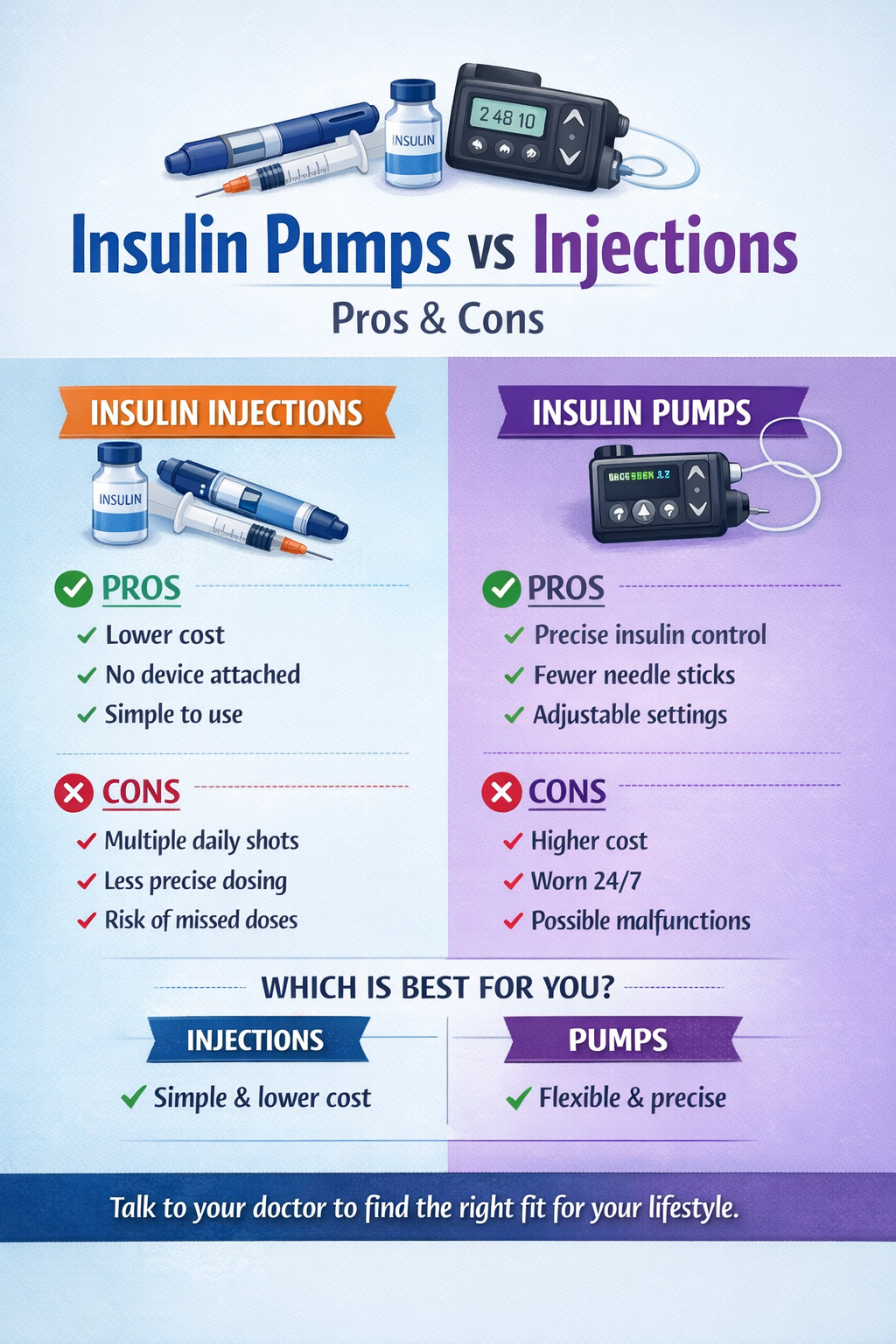
- Lower upfront cost than pumps
- No device attached to the body
- Simple and widely available
- Proven effective when used consistently
⚠️ Challenges
- Multiple injections per day
- Must remember doses manually
- Requires carb counting and timing
- No automatic tracking of past doses
Organizations like the American Diabetes Association recognize MDI as a standard and effective therapy option for many people with Type 1 Diabetes.
What Are Smart Insulin Pens?
Smart insulin pens look like regular insulin pens but include digital tracking technology. They can:
- Record dose amounts
- Track time of last injection
- Connect to smartphone apps
- Help calculate doses (in some models)
- Reduce missed or double dosing
Some systems integrate with glucose data for better decision-making.
Examples include options from companies such as:
- Novo Nordisk (NovoPen® Echo Plus)
- Eli Lilly and Company (connected insulin systems)
Benefits of Smart Pens
✅ Fewer forgotten doses
✅ Better dose accuracy
✅ Data sharing with healthcare providers
✅ Helpful for teens, busy adults, and parents managing children’s care
Who Might Benefit Most?
Smart pens can be especially helpful for:
- Newly diagnosed patients
- People struggling with missed doses
- Parents managing insulin for a child
- Anyone who wants pump-like tracking without wearing a device
Bottom Line
Traditional injections are effective and affordable.
Smart pens add convenience, tracking, and digital support.
The best option depends on:
- Your lifestyle
- Your comfort with technology
- Insurance coverage
- Your blood sugar goals
Always discuss changes with your healthcare provider.