
Insulin pumps are advanced devices that deliver insulin continually throughout the day and night. They can offer greater flexibility and precision than traditional injections, especially for people aiming for tighter blood sugar control.
What Is an Insulin Pump?
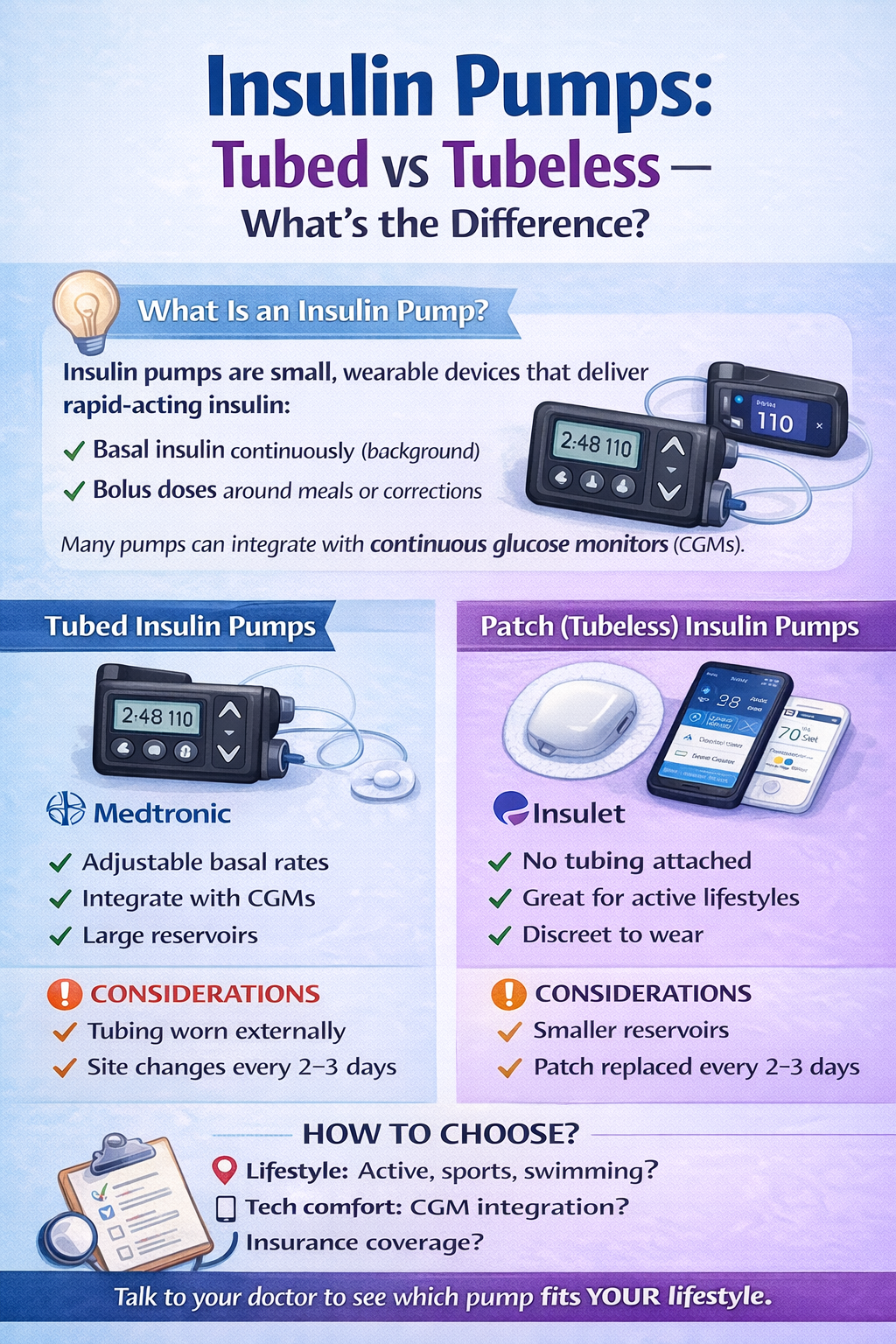
An insulin pump is a small, programmable device that delivers rapid-acting insulin:
- Basal insulin continuously, to mimic your body’s background needs
- Bolus doses around meals or for corrections
Many pumps can work with continuous glucose monitors (CGMs) to automate delivery based on glucose trends.
Two Main Styles of Insulin Pumps
1. Tubed Insulin Pumps
These pumps use a thin tube (catheter) that connects the device to a small cannula inserted under the skin.
Examples & Brands
- Pumps from companies like Medtronic
- Tandem Diabetes Care pumps such as the t:slim X2®
Benefits
✔ Adjustable basal rates throughout the day
✔ Often integrate with CGMs for automated insulin adjustments
✔ Large reservoirs — fewer refills
Considerations
⚠ You wear tubing on your body, which can get caught during activities
⚠ Site changes required every few days
2. Tubeless (Patch) Insulin Pumps
Tubeless pumps attach directly to the skin with no external tubing. They deliver insulin wirelessly and are controlled by a handheld remote device or phone.
Examples
- Patch pumps like those from Insulet (e.g., Omnipod®)
Benefits
✔ No tubing — feels less “attached”
✔ Great for active lifestyles, sports, swimming
✔ Discreet and easy to wear
Considerations
⚠ Reservoir size may be smaller than some tubed pumps
⚠ Patch needs regular replacement (e.g., every 2–3 days)
How to Choose?
There’s no one-size-fits-all pump. Think about:
📍 Lifestyle — Are you very active? Do you swim or play contact sports?
📍 Tech comfort — Do you want integration with CGM and automation?
📍 Body type & preferences — Tubed vs tubeless comfort
📍 Insurance coverage — Which pump options are covered?
Both styles aim to:
✅ Provide consistent insulin delivery
✅ Reduce daily injections
✅ Improve glucose control when used properly
🩺 Talk With Your Healthcare Team
Your endocrinologist or diabetes educator can help you:
- Compare pump features
- Review CGM integration
- Understand training and support plans
Bottom Line
Tubed pumps offer precision and deep customization, while tubeless pumps offer freedom and simplicity. The right pump for you is the one that fits your body, lifestyle, and goals.
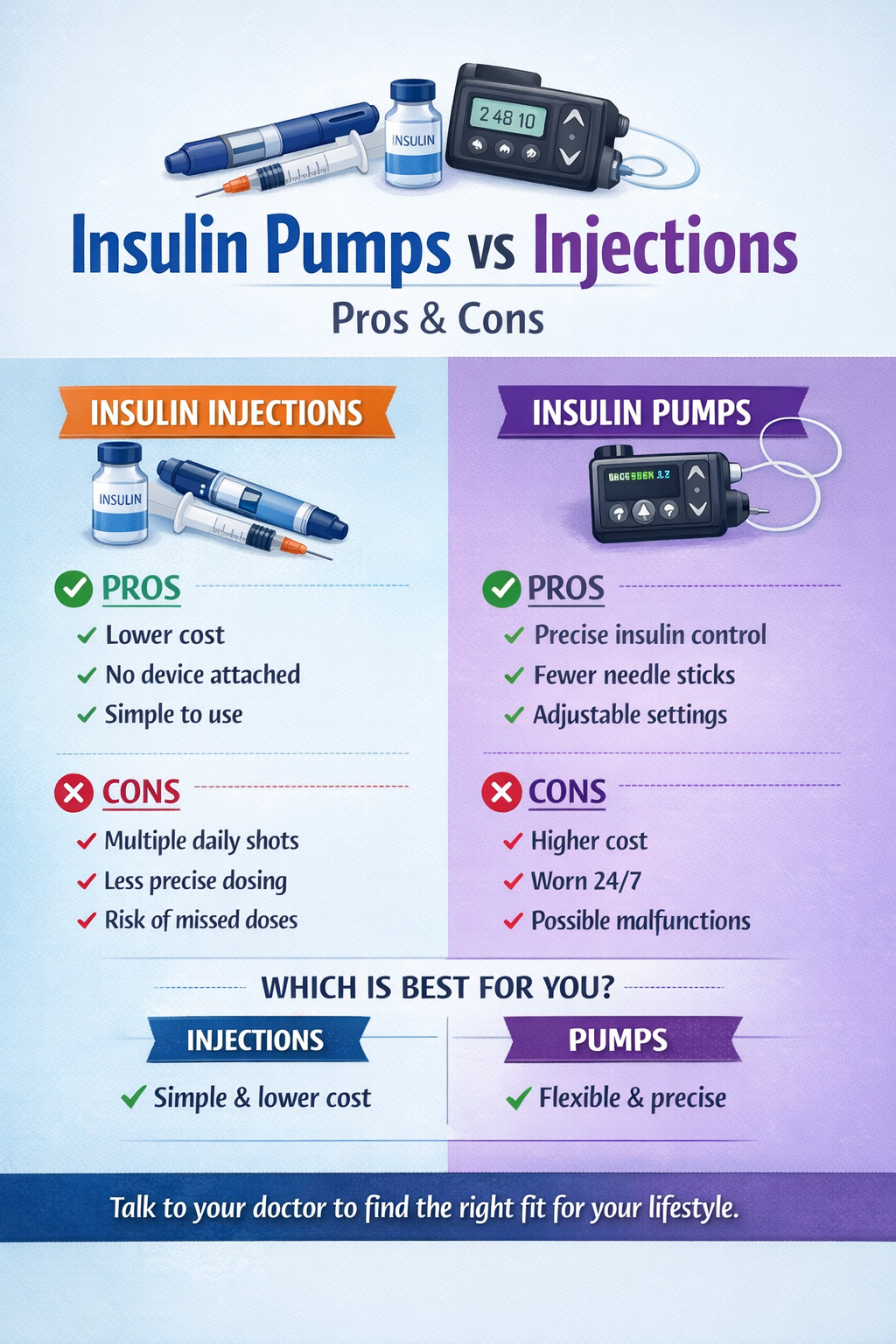
If you are still debating between an insulin pump and injections, be sure to visit our website page.