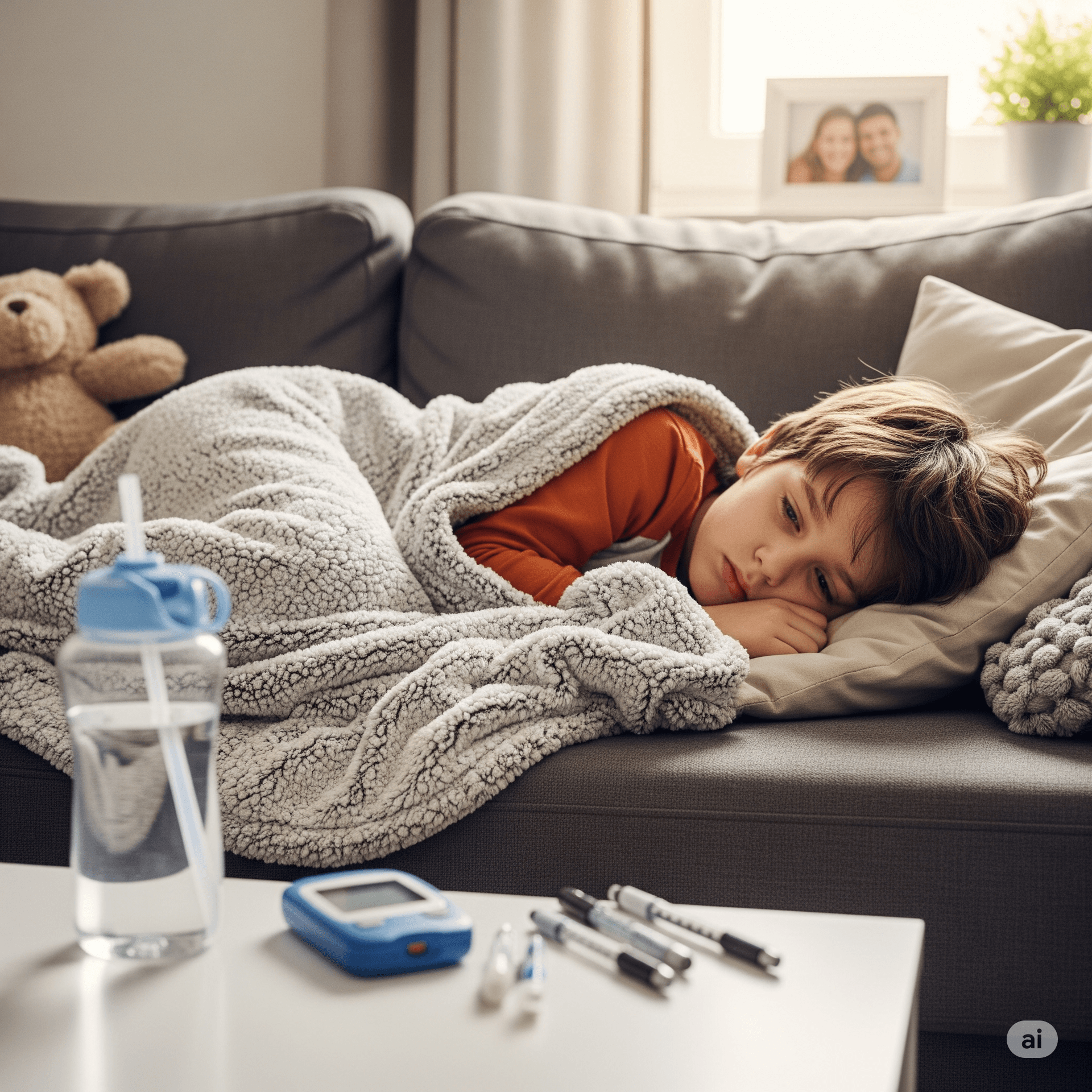
Feeling under the weather? Even minor illnesses can raise your blood sugar and increase the risk of ketones or DKA. Here’s how to stay safe:
DO
Check blood sugar every 2–4 hours Drink fluids every hour — water, broth, or sugar-free drinks. Sugar drinks may also be needed depending on the situation/illness Check ketones every 2 hours until they are negative Insulin-always take your long-acting (basal) insulin, you will also need your fast-acting (bolus) insulin, but it may need adjusted Follow your sick-day plan and contact your diabetes team
CALL YOUR DOCTOR IF
You can’t keep food or fluids down Blood sugar stays over 250 mg/dL despite insulin Moderate to large ketones are present You feel very tired, confused, or are having trouble breathing
Sick with NO ketones: – Blood sugars may run above 180 mg/dL – Increase insulin or call your diabetes care team for adjustment right away – Do not wait for patterns of high blood sugars before making the adjustment – Check for ketones with each blood test even if blood sugar is normal
Sick WITH ketones and HIGH blood sugar, but able to eat: – Increase fast-acting insulin – Eat as tolerated – Drink 8oz. of sugar-free fluids each hour until ketones are gone (Click here for sugar free drink options) – Call diabetes care team every 2-4 hours until ketones are negative
If you are unable to eat, vomiting, and HAVE ketones: – If blood sugar is ABOVE 160, increase fast-acting insulin, lower the long-acting insulin – If blood sugar is BELOW 160, fast-acting insulin may need to be lowered along with long-acting insulin – Drink small sips or sugar drinks, alternating with sugar-free drinks – Give regular Jell-O, popsicles, lollipops (opens in a new tab), Pedialyte (opens in a new tab), freezer pops (opens in a new tab)– Call your diabetes care team every 2-4 hours until ketones are negative
If blood sugar keeps dropping below 70 and your child can’t keep fluids in, or is having trouble breathing, go to your local emergency room.
Medications: – Steroids can cause the need for very large doses of insulin – Antihistamines take away the symptoms of low blood sugar – Most children’s medications have sugar, but can be used. The child might require more insulin for higher blood sugars, but this is preferred at times rather than using sugar-free products that have high sugar alcohol levels. Always check the labels!
**Remember everyone’s sick day plans are different, this is just a guideline. Always talk to your diabetes team.**