For many people living with Type 1 Diabetes, insulin injections are a reliable and effective way to manage blood sugar levels. Today, traditional insulin pens are also being enhanced with smart technology to make diabetes management easier and more precise.
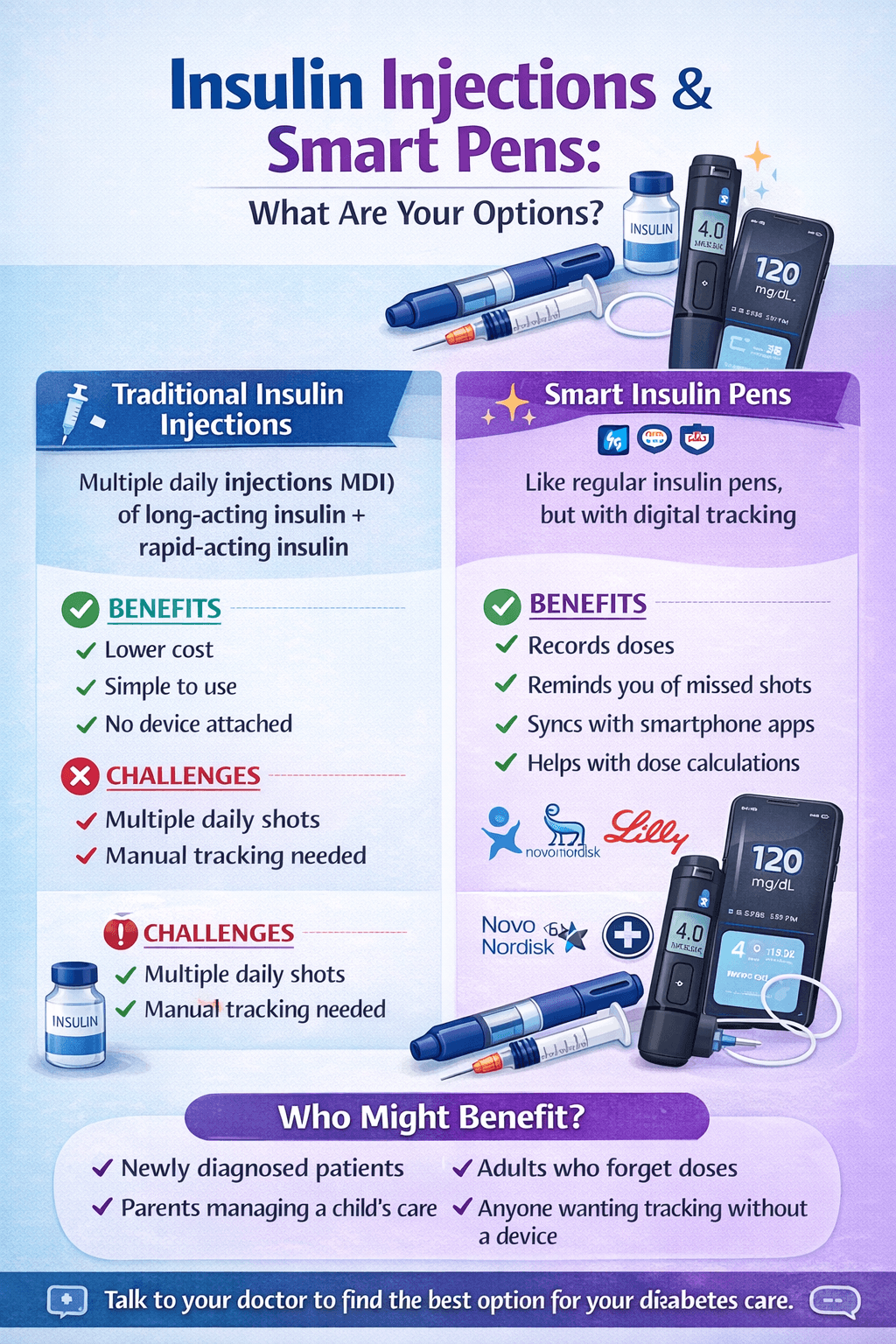
Traditional Insulin Injections
Most people using injections follow a Multiple Daily Injection (MDI) routine:
- Long-acting insulin (1–2 times daily) for basal coverage
- Rapid-acting insulin before meals for carbs and corrections
Benefits
- Lower upfront cost than pumps
- No device attached to the body
- Simple and widely available
- Proven effective when used consistently
Challenges
- Multiple injections per day
- Must remember doses manually
- Requires carb counting and timing
- No automatic tracking of past doses
Organizations like the American Diabetes Association recognize MDI as a standard and effective therapy option for many people with Type 1 Diabetes.
What Are Smart Insulin Pens?
Smart insulin pens look like regular insulin pens but include digital tracking technology. They can:
- Record dose amounts
- Track time of last injection
- Connect to smartphone apps
- Help calculate doses (in some models)
- Reduce missed or double dosing
Some systems integrate with glucose data for better decision-making.
Examples include options from companies such as:
- Novo Nordisk (NovoPen® Echo Plus)
- Eli Lilly and Company (connected insulin systems)
Benefits of Smart Pens
Fewer forgotten doses Better dose accuracy Data sharing with healthcare providers Helpful for teens, busy adults, and parents managing children’s care
Who Might Benefit Most?
Smart pens can be especially helpful for:
- Newly diagnosed patients
- People struggling with missed doses
- Parents managing insulin for a child
- Anyone who wants pump-like tracking without wearing a device
Bottom Line
Traditional injections are effective and affordable. Smart pens add convenience, tracking, and digital support.
The best option depends on:
- Your lifestyle
- Your comfort with technology
- Insurance coverage
- Your blood sugar goals
Always discuss changes with your healthcare provider.